Authentic Chile en Nogada Recipe — Puebla's Iconic Dish
↳ dispatch from the shore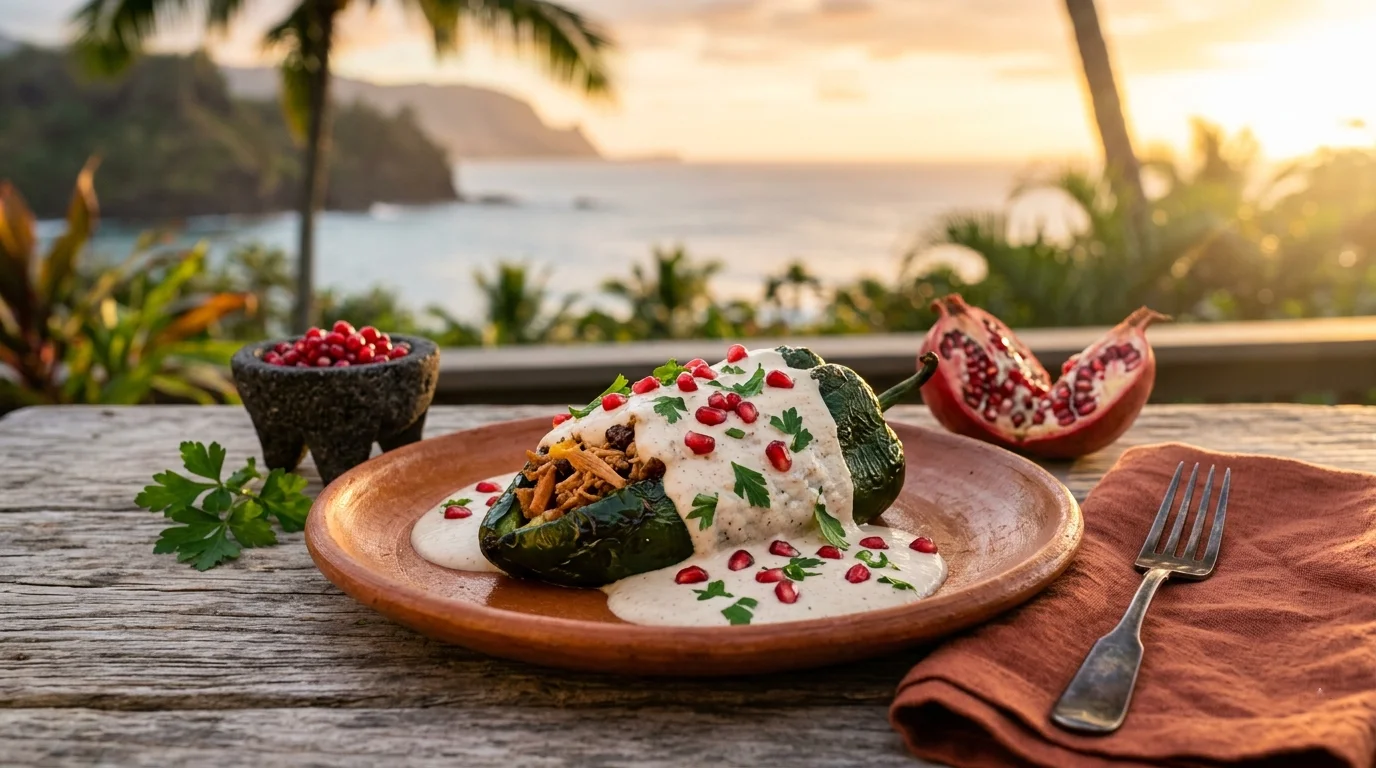
Some recipes are food. Chile en nogada is a flag. Green parsley, ivory walnut sauce, ruby pomegranate seeds — the colors of the Mexican flag, plated. Inside each poblano pepper sits a picadillo built from pork and stone fruit, stirred slowly until the spices and the sweetness pull together into something you can’t quite describe and don’t forget. It is one of the most beautiful dishes in authentic Mexican food, and the kind of Mexican recipe you make when the table needs to mean something.
Every September, families across Mexico make chiles en nogada to celebrate Mexican Independence Day. I’ve made this authentic chiles en nogada recipe more times than I can count, and the verdict is always the same: it is a traditional Mexican dish that earns every step you put into it, and an iconic dish that quiets a room the moment it lands on the table. This is the home version. It takes a real afternoon. Nothing about it is hard if you work step by step.
The Story Behind the Dish
This is a dish from Puebla. The story goes that it was created in 1821 by nuns at the Convent of Santa Mónica to honor Agustín de Iturbide after Mexico’s independence from Spain — and that they built it deliberately to mirror the new Mexican flag. Green from parsley. White from the nogada. Red from pomegranate. Whether the legend is exact history or convent embroidery, no one can really say.
What isn’t in question is that this festive dish belongs to independence day. Walk into a restaurant in Puebla anytime in August or September and the menu will tell you so. Think of it as chile rellenos in formal wear — the same stuffed poblano chile, dressed for an occasion. Muy mexicana, muy festive, and the recipe you reach for when you want to celebrate Mexican independence in your own cocina.
What You Will Need
This recipe serves 6.
For the Roasted Poblanos
- 6 large poblano peppers (whole, firm)
- A gas burner, broiler, or open flame for charring
For the Filling (Picadillo)
- 1 lb ground pork (or a mix of pork and ground beef)
- 1 small onion, finely chopped
- 3 cloves garlic, minced
- 1 ripe peach, peeled and diced
- 1 ripe pear, peeled and diced
- 1 small apple, diced
- 1/3 cup raisins
- 1/4 cup slivered almonds, lightly toasted
- 2 tbsp candied cactus (biznaga or acitrón) — chopped candied pineapple or citron work as substitutes
- 1 tsp ground cinnamon
- 1/2 tsp ground cloves
- 1/2 cup tomato puree
- Salt and freshly ground black pepper
- 2 tbsp olive oil
For the Walnut Sauce (Nogada)
- 1 cup raw walnuts
- 1/2 cup blanched almonds (optional, for body)
- 1/2 cup goat cheese, crumbled
- 1/4 cup cream cheese
- 1/2 cup Mexican crema (or sour cream as a substitute)
- 1/2 cup whole milk
- 1 tbsp granulated sugar
- A pinch of salt
- A small splash of dry sherry or sweet white wine (optional)
For the Garnish
- Seeds from 1 large pomegranate
- A handful of fresh parsley leaves
Step-by-Step Instructions
1. Roast and Peel the Poblano Peppers
Set the poblano peppers right over an open flame on a gas burner. No flame? A broiler works. Turn them often. You’re after a uniform char — skin blistered, blackened, cracking open in places. Five to eight minutes does it. This is the only way to get genuinely fire roasted chiles, and nothing else gives you that flavor.
Move the charred chiles to a bowl and cover tightly with plastic wrap. Let them steam for ten minutes while you start something else. The skin loosens on its own.
Now peel. Use your fingers, or a paper towel if the skin is stubborn. Cut a small lengthwise slit down each pepper and reach in to remove the seeds and the white inner membranes. Try to leave the stem on — it makes for a more beautiful presentation later. With the skin removed and the seeds cleared, line your skinless roasted poblanos up on a tray and walk away from them. They’ve done their job.
2. Cook the Filling
Warm the olive oil in a large skillet over medium heat. Slip in the onion and garlic and cook for 5 minutes — soft, fragrant, no color.
Add the ground meat. Break it up with a wooden spoon and cook the filling, stirring now and then, until the pork is fully browned. Eight to ten minutes. Don’t rush; the brown bits stuck to the pan are flavor.
Now the fun part. Stir in the peach, pear, apple, raisins, almonds, candied cactus, cinnamon, and cloves. Add the tomato puree and a heavy pinch of salt. Drop the heat and let the whole thing simmer for ten minutes until the fruit gives up its sweetness and the spices fold in. Taste it. Adjust. The picadillo you’re after is sweet but savory, warm with cinnamon, never cloying. If it tastes flat, more salt. If it tastes too sweet, more salt anyway.
Set it aside to cool a little while you make the creamy walnut sauce.
3. Make the Walnut Sauce
Traditionally, the nogada is made from freshly peeled walnuts whirled with soft cheese, cream, and a quiet touch of sugar. Purists soak the walnuts overnight and pinch the thin brown skin off each one, so only the pale meat is incorporated into the sauce. The result is whiter, milder, more elegant. The catch is the labor. Peeling walnuts is tedious enough that I’ve skipped it more than once. The sauce will still taste excellent without it. A little darker, a little more rustic. Pick whichever version your evening can carry.
Into the blender: walnuts, blanched almonds (if you’re using them), goat cheese, cream cheese, Mexican crema, milk, sugar, salt, and the splash of sherry. Blend until the walnuts break down completely and the sauce is smooth and creamy. One to two minutes. If the blender struggles or the mixture seems too thick, loosen it with a little more milk.
You’re aiming for something that pours but still clings to the back of a spoon. Taste it. A pinch more sugar if you want gentle sweetness. A pinch more salt to keep that sweetness honest.
4. Assemble and Serve
Spoon a generous mound of picadillo into each roasted poblano. Peppers stuffed with this mixture should be plump but not bursting — the slit closes loosely under your fingers, no toothpicks needed.
Set each stuffed poblano on its own plate. Pour the sauce over the chile until it is fully blanketed. Sprinkle with pomegranate seeds and parsley leaves.
This is the moment. Green parsley. White nogada. Ruby pomegranate. The colors of the Mexican flag, served on a plate.
Eat right away, while the chile is still warm and the sauce is cool. Buen provecho.
A Vegetarian Version
This recipe adapts cleanly to a vegetarian version. The job is the same: build a filling with enough body and savor to stand up to the creamy sauce.
Drop the ground meat. In its place:
- 1 cup cooked brown lentils
- 1 cup finely chopped cremini mushrooms, sautéed until deeply golden
- 1/2 cup crumbled queso fresco or extra goat cheese
Cook the onion and garlic the way you would for the meat version. Stir in the mushrooms and let them brown hard — the dark crust on the pan is the savor. Now add the lentils, then the fruit, raisins, almonds, cinnamon, and cloves, exactly as in the original recipe. Finish with the tomato puree and simmer for 10 minutes so the flavors are incorporated into the filling.
Stuff the roasted poblano peppers with this mixture, pour the sauce over each one, and garnish with pomegranate seeds and parsley. Peppers stuffed with a mixture of lentils, mushrooms, and cheese hold their shape every bit as well as the meat version, and the nogada doesn’t notice the difference. Honestly, no one at the table will either.
Tips for the Best Chiles en Nogada
- Char the chiles harder than feels right. A polite roast leaves chewy skin behind every time. You want blistered, blackened, ready to slip off.
- Don’t skip the fruit. Peach, pear, apple — that quiet sweetness is the bridge between the savory picadillo and the rich nogada. Skip it and the dish loses its center.
- Peel the walnuts if you have a free hour. It is the difference between a good sauce and a memorable one. Worth it for company; not worth it for a Tuesday.
- Serve at room temperature, not piping hot. Authentic chiles en nogada are meant to land warm against a cool sauce. Straight from the oven flattens it.
- Have your ingredients on hand before you start. This recipe has a lot of moving parts. Mise en place is what makes the step-by-step instructions feel manageable instead of frantic.
Frequently Asked Questions
When do Mexicans traditionally eat chiles en nogada?
August and September, with September 16 as the high point — Mexican Independence Day. The timing isn’t accidental. Poblanos, pomegranates, and stone fruit are all in season at exactly the same window.
Can I make chiles en nogada ahead of time?
Sort of. The picadillo and the walnut sauce both keep well in the fridge for a day. Roast and stuff the poblanos the day you serve. Assemble right before serving — pomegranate fades fast once it sits.
What is biznaga, and what can I use instead?
Biznaga (also called acitrón) is candied cactus. It used to be standard in this dish from Puebla. The barrel cactus it comes from is now federally protected in Mexico, which makes it nearly impossible to find outside the country and an ethical question even when you can. Candied citron, candied pineapple, or chopped dried apricot are all good stand-ins.
Can I use sour cream instead of Mexican crema?
Yes. Sorry to say, true Mexican crema is hard to find outside of Latin markets. Sour cream thinned with a splash of milk gets you 90% of the way there, and the nogada sauce won’t tell on you.
What if my walnut sauce is too thick?
Loosen it with a little more milk or crema. The sauce should coat the chile and slide, not sit on top of it like frosting.
Is chile en nogada spicy?
No. Poblanos are mild to begin with, and the sweet filling and creamy sauce soften the heat to almost nothing. The dish is rich and layered, not hot.
A Festive Dish Worth the Effort
Roasted poblano peppers stuffed with picadillo, blanketed in nogada, scattered with pomegranate. This isn’t weeknight food. Chile en nogada is what you cook when the table needs to mean something — independence day, a family gathering, or the late summer evening when the poblanos and the pomegranates land in the market at the same time. The dish rewards every minute you give it, and the finished plate is one of the most beautiful in all of Mexican food — a cuisine recognized by UNESCO as part of humanity’s intangible cultural heritage.
If you’d rather we did the cooking, you’ll find our take on stuffed poblanos and chile rellenos on the restaurant menu at our Hau’ula location, with a quicker hit of authentic Mexican flavors at our Sharks Cove food truck on Oahu’s North Shore. Whether you make chiles en nogada at home or come find us, buen provecho — and happy independence day.
★ Tags
Elen Corazzari
Co-Owner & Operations
Elen Corazzari manages operations at North Shore Tacos and keeps everything running smoothly across both locations. She's the reason your order comes out fast and perfect.
★ Keep Reading
Related Posts
↳ more stories from the shore


★ About North Shore Tacos
Where to Find Us.
↳ two stops + one truck for events- 01 Visit →
Hauʻula Restaurant
↳ full-service + drive-thruSit-down dining + drive-thru on the Windward Coast. Open daily 11 AM – 9 PM.
- 02 Visit →
Sharks Cove Food Truck
↳ walk up, eat outsideWalk-up window across from the Pupukea snorkel reserve. Open daily 10 AM – 8:30 PM.
- 03 Get Quote →
Oahu Taco Catering
↳ we come to youWeddings, corporate events, luaus, beach parties — get a custom quote.